Why finishing games is tough…

May 15th, 2012

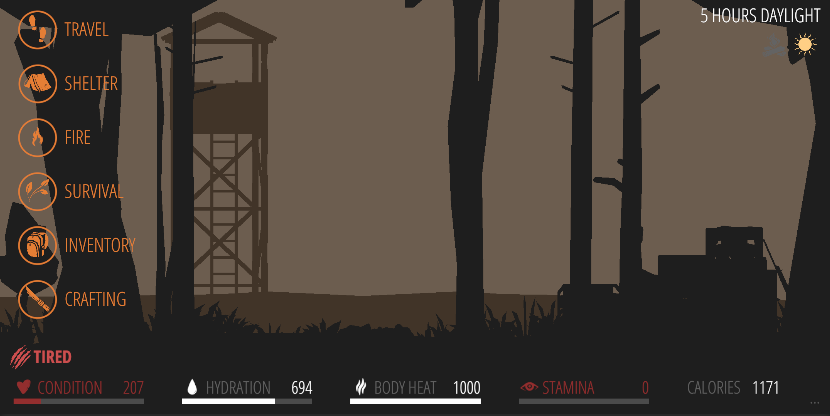
Earlier, I drew this as a joke (and shared in twitter)… but it’s not funny.

It’s so easy to get into mindset of doing “just one more change”, “just one more thing”. And that prevents game from getting done. The last playtests I did, made me think that I need to change one card. Gameplay already worked just fine, but somehow I didn’t like how the one card worked, so decided to change it.

That’s it, I say to myself. But this small change means I gotta go through more testing to ensure things are balanced.

I’m already proud of what I’ve done, and even though I keep getting more ideas for more items, more specialties and more everything… I decided to do folder called “expansion” and put the ideas on that folder. When I get new ideas, I know where they go.

That way I feel that my ideas are waiting there, not gone in vain – but also that I get sensible progress.

And, finally I can start say that this card game of mine – it’s near the finish line. I have bunch of tasks on my list. Cannot wait to get them done.

What about you – are you feature creep? Where do you draw the line between “polishing” and “creep”?

Click here to gain some experience points

May 1st, 2012

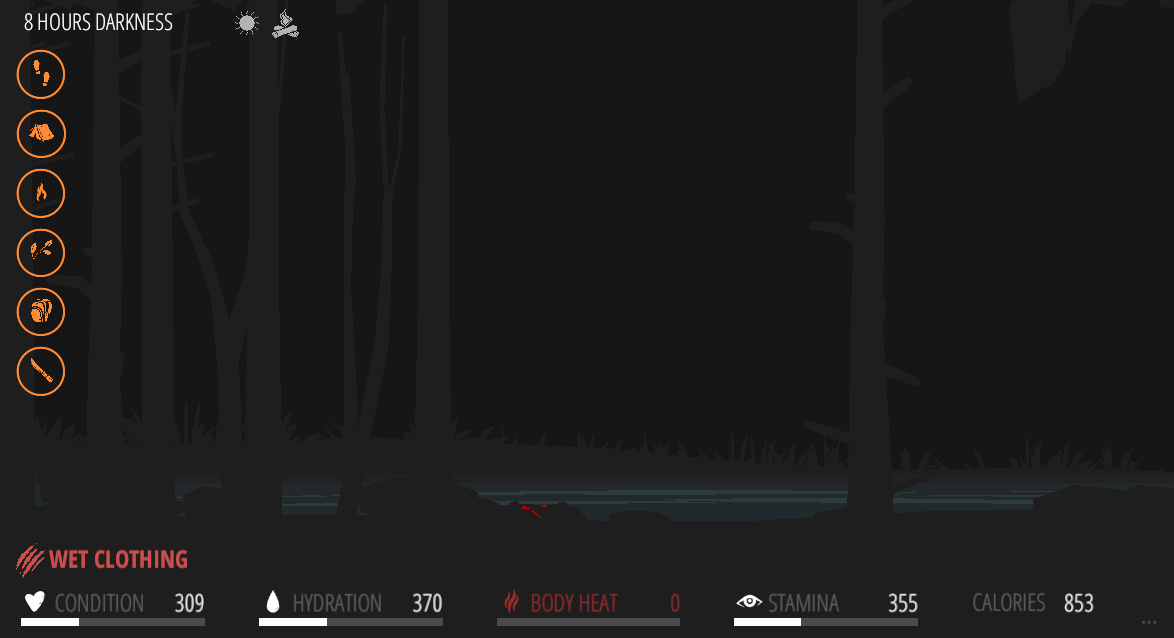
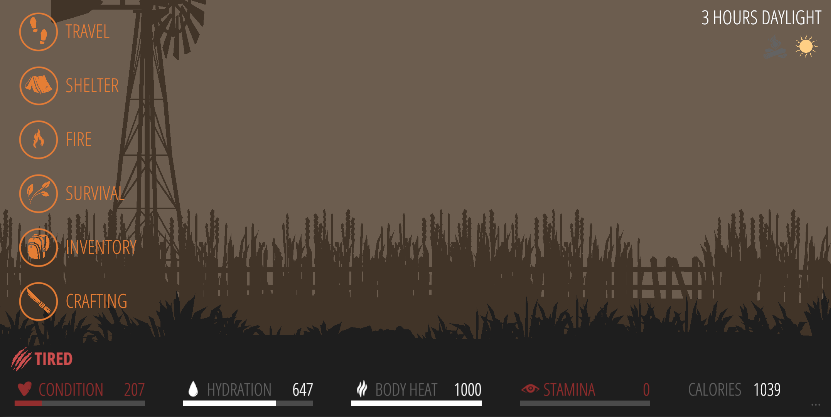
I recently draw this image that points out a small challenge in game design:

Naturally this isn’t a problem if you happen to have tons of time and enjoy grinding and that sort of stuff.

But for me… this is bit of an issue. In Fallout, it was issue since I prefer to enjoy the story. Random encounters, even some really small sidequests where bit of grinding type of stuff for me that I didn’t like. All I wanted was to get to do a meaningful big scale decision that affects the outcome of the story, not shoot some monsters somewhere in a desert.

Don’t get me wrong – Fallout is great game, and I totally enjoyed the experience and almost everything it offers. But there were times when I stopped progressing main story or fun side quests, and did smaller stuff instead, just to level up.

Let’s take another game: Witcher. I played it briefly, but quickly it started to feel like I’m just getting better skills for the sake of getting better skills, and story for me wasn’t progressing in sane way. I liked the world, the cut-scenes, parts of story and unlock stuff… but it all was wrapped in a big box of repetitive play, which unfortunately I don’t have time to do. Sure, it was different (I wasn’t just killing spawning rats over and over in one place), but doing the same thing in every single side quest (go to place A, kill something, go place B, get reward – over and over) smells grindish to me.

Again, I’m not saying that Witcher is bad. I’m just saying that the gameplay is somewhat repetitive in such way that I perhaps didn’t like so much. It was the main story that kept me playing.

Combat and fighting can be fun. They can provide meaningful choices in them, but when combat is about 100% victory against a spawning enemy with some reward for the sake of leveling up… then we are approaching bad design.

Why bother with battles that players are certain to win and must repetitively do for the sake of leveling up?

It’s pretty much the same as if you’d give player button “click here to gain experience”.

Somewhat lengthy post about lessons on creating a board game

April 26th, 2012

I’ve been working on a card game for about two years now. Here’s some pointers for those who seek to develop a physical board (or card) game.

One gotta learn much about game mechanics
I think it’s natural for board games to be somewhat less immersive than video games. In video games, you can actually create a game around a simple mechanics, and let player be immersed by the story and visuals. You can have simple mechanics too in board games, but telling a story is slightly more difficult. It can happen, but most of the games I play I can “see” what’s going on better, and can focus more on the mechanics.

This point is hard to explain, but let’s put it this way:

If you do a shooter (FPS), you pretty much have game mechanics designed for you. The real job is doing art, weapons, storyline… everything related to other stuff than mechanics.

If you do a “shooter” board game, it’s totally different. You gotta start ponder how much strategy will be involved, how the game is won, whether to use dice or not, all sorts of stuff that goes into having an enjoyable gaming.

With board games, you gotta have a solid mechanism there, and you have to really understand what makes it fun.

Design for co-op experience is a pretty good idea, but has flaws too
My game evolved to be for 1-4 players. It can be played either cooperatively or competitively. Main portion of testing has been me alone, only some with groups of 3-4 people. It’s difficult to design competitive system for more than 1, since you are the only one testing it.

If you make sure there’s cooperative mode where 1 player can play the game, then it’s easier to scale to 4.

But scaling doesn’t happen automatically. In my game, I barely could beat 1 player game, but when playing with 4 we easily beated it in one version. Later, I have added rules that balance the game better.

…but if doing cooperative, why do board game at all?
The flaw with “designing for 1 player experience too” is that, then you start asking yourself: “why do this as physical board game? why not do digital video game instead?”

That’s a damn good question. Main reason for me for doing a board game were these:

  • It’s my dream to make a card game and see it in stores.
  • Physical card games have better UI than for example ios card games. There’s something great about being able to touch and move cards.
  • 4 player multiplayer around real people in real world is just differently fun experience that computer games cannot ever reach. Occasionally, it’s fun to see real people… and play with them around the same table

Nevertheless, one should still consider whether to do physical board games or not. There are same drawbacks that I’ll list in the next point.

Drawbacks of doing physical games
Unless you are skilled with papernotes, pencil and scissors and can live with these… at some point you want to have cooler looking art, real cards and such stuff to test with. To me, it made a huge difference to actually have proper cards with game art in there. And this leads to following cons:

  • You would do good to invest in a good laser printer. I was consider this several times, but decided to simply use card making service instead. Anyways, a good laser printer is needed.
  • If you need other than cards, well, take them from other board games you have or buy some plastic soldier toys or anything from stores. My game is cards only, much for this reason.
  • Shipping takes time. I use Artscow (multi purpose cards rectangle to be exact) for my cards. Their card quality has increased during the 2 years and they always have some sort of “free shipping” or similar coupons available. Remember to have some sort of “bleed” there too.
  • Getting assets in game takes time. I created a “text to art” software that bakes text files and image files together and makes nice stuff that I can use in games. If you are interested about this, you can try pester me via email. It requires bit of manual work but has certainly helped me a lot.
  • Playtesting takes time: this was perhaps the most unexpected thing for me. I have a gaming group, but also 2 kids… so group playtesting sessions can have weeks of gaps.

So, creating a card game isn’t necessarily “a simpler thing” than what I first thought when I started making this game!

What took most of my time
Two things:

  • Game mechanics
  • Balancing

These two things by far have taken my time. It took me time to get mechanics “right”. Now I know they are good and work, and the last months have been about balancing. There has been cards that are way too powerful, and therefore needed tweaking.

One of the biggest positive lessons has been…
The fact that my game mechanics understanding has been improved. I pay much more attention to “core” of the games and how they work. I have needed to dive into the “fun” and really try understand it better. I think all video game developers would do good to design one card game, for the sake of learning more about game mechanics and how they contribute to fun gaming.

Some recommended reading
Here’s stuff I found handy:

There’s plenty of more, but these would be fine starting points.

What’s next?
I’ll polish my game, do final testing, have small self-pulish print run (like 50 copies via the Game Crafter to cater to those who want – but not more, in order not to scary any publishers away) and then knock on publisher doors.

Thoughts about Grimrock style game development

April 20th, 2012

Grimrock is a damn cool game. Damn good looking. Damn “old” core mechanics (Dungeon Master 1987). And it sells like hotcakes.

Why?

Because they put together a dedicated 4-man team who is passionate about this sort of game. The game isn’t stuck in the 20+ year old mechanics, but offers various new twists and makes the genre take a big leap forward. Not too big though, as it seems that everybody buying the game is saying “how they loved this type of games back then…” – for nostalgic reasons too.

I’m 110% confident no publisher would ever have taken this type of game. Because “it’s old stuff, nobody plays those anymore”.

Grimrock sold already more than what development costs were, so they are doing already pretty good.

Smells like the success formula:

“good old mechanic” + “add your own passion” + “boil with some new ingredients” = tasty gaming meal is prepared.

One million reached

April 5th, 2012

1,039,738 unique visitors that is (since May 2006, I lost some tracking in 2005)

That’s pretty nice! Thank you all for visiting.

Handy Guide: How to lose a customer

March 28th, 2012

Step #1: Argue about who was right.

That’s it.

Good thing there’s other local companies that are willing to take my opinions – and money. Makes it easy to switch.

Emergent goal seeking AI for RPGs

March 27th, 2012

Computer RPGs I’ve learned to play rely heavily on combat as the way to gain experience. Couple of previous post discussed about alternatives to combat, and Matt’s comment made me thinking about a bit different type of way to perhaps create emergent play in RPGs. No idea if this would work, but here goes.

Imagine there’s bunch of goblins guarding a treasure cave. Each goblin would have motivations, such as these:

  • Need for food (avoiding hunger)
  • Shelter (avoid rain for example)
  • Being safe (for example, sticking with a bigger group or perhaps running away)

And so on…

Now, our hero arrives near the treasure cave and thinks for a moment about the situation. In our typical RPG, you’d usually draw your sword and hack’n'slash em.

But what if we could instead have AI that reacts to different stuff. For example, hero could leave food near and make noises that attract goblins to check out the noises. When goblins go check noises (that would be programmed in a common “guarding behavior” AI), they would see food… and hungry goblins would remain there to eat the food. Others might instead return. If there wasn’t any food, all goblins would return back.

Or what if hero uses a rain spell: it starts rain and it causes goblins to scatter: some go find shelter at nearby trees… some perhaps would go back to cave.

These type of motivational goals, combined with behaviors such as guarding might create interesting or different options for players, without need for custom scripting for every single event. Instead of focusing scripting events, you would focus on creating new goals and behaviors.

Here’s some more motivational goals for creatures:

  • Ensure safety of your child (works for bears as well as humans)
  • Greed (wants gold)
  • Item collector (wants to collect for example different swords or beast claws or whatever)

Et cetera. By adding more and more of these motivational layers, and then with behaviors/intelligence on top of that, we might be onto something.

You could add there some scripting or random events: perhaps somebody else approaches the cave and goblins immediately attack that guy… leaving our hero to sneak past the goblins. Or perhaps hero decided to hire somebody to “ride near this cave the next midnight”.

Experience might be rewarded from trying different options, if there would be some sensible algorithm for that. Or, experience might be based on finding items or visiting locations, not killing creatures between you and the treasure.

Thoughts?

What if there would be alternative to “combat” when dealing with conflicts?

March 22nd, 2012

hermitC’s comment on my previous blog post got me thinking about Dungeon & Dragons game. When I was 10ish years or so, we played D&D role playing game (I was wizard, yes). When our group encountered goblins near treasure cave, we had pretty close to one solution to this problem: combat!

Whatever we encountered, our swords and nasty fireballs would solve. We played D&D for some years and it was cool.

Decade later (or bit less) we tried to run again a campaign. This time things had changed. When we encountered goblins or orcs, we didn’t first shoot and … well, that usually did the trick earlier. No, we tried different ways to deal with encounters.

When goblins were guarding a lair, our group could do things such as:

  • Use sleep spell to get them – well – to sleep so we could go past em (earlier we could naturally have cut their throats of course… but now we just wanted to go pass em)
  • We could try bribe em: giving them gold coins which pays more than their current pay..
  • We could try persuade them that their job sucks and they should join us to attack the evil mage
  • We could have waited them to go to sleep… and then sneak past them
  • We could have tried capture leader of the group, and then use leader to get other goblins to drop their weapons
  • We could have tried to lure them away from the lair, by putting tasty food or such at distance… and then sneak in.

At older age, we tried to avoid combat and the playing style was much more different. Earlier it was hack’n'slash… now we actually were using brain to overcome challenges.

What if RPG would not give you one option – combat – to overcome challenge. What if instead there would be multiple ways to deal with the situation, and only if those fail – combat begins.

Sure, it might require work to get it done. It would require imagination to come up with alternative ways to solve things and think how these solutions affect gameplay, experience, mechanics, character relations, story and so on.

But could it be worth it?

Do RPGs really need combat?

March 22nd, 2012

Some days ago I tweeted about RPGs without combat. What would be left if [insert random rpg here] would not have combat?

Combat in RPGs is fine if it serves a purpose. For many gamers, the purpose of combat is leveling up, beating bigger monsters over and over again. Many gamers enjoy those things and decisions the combat offers. To me, games need to provide interesting decisions. Combat can be interesting. Choosing whether to attack good guy is an interesting decisions. Choosing best weapons for the next fight and planning attack can be interesting. Many things can be interesting.

But hitting a giant scorpion, running away and then hitting again that scorpion over and over until it dies is not interesting. That’s boring hit’n'run tactic where (1) I know I win if I do this and (2) I know I die and game is over if I don’t do this.

In Fallout 1, combat for me was most often only a roadblock. Combat kept me away from enjoying the story and seeing new things. In Fallout 1, combat wasn’t often so interesting. Seeing new guys, using some drugs that made your guy “combat drug addicted” during combat was pretty cool… but overall I didn’t really need all that combat.

In some games, combat is the very essence of the game. Monster Hunter series for example is built around the combat and is the meat of the game. In MH, I liked the combat.

In Fallout 1, the story and decisions were much more interesting and combat (to me) felt unneccessary.

In Battlefield 1942, combat was definitely okay. The whole game is about combat, and training your own skills in the combat field.

But what about RPGs? When we check top selling RPGs, I can almost bet that there’s 7 out of 10 some sort of “Diablo” clones. Those hack’n'slash games to me aren’t rpgs…

Why RPGs require you to combat & grind so that you can then progress with the story?

Why not progress & enjoy the story and decisions without combat?

Thoughts?

This is how a seemingly harmless, pretty useless feature can provide amazing gamer experience & great stories

March 9th, 2012

Last night, my bro and I played a fierce NHL ’12 match (PS3, mics on). The match was really tough, first I managed to get 2-0 lead, then he managed to get even to 2-2 and even take lead 2-3. Few minutes before end of the game I managed to score 3-3, so it was time to play overtime. The next one to score wins the match.

Overtime was tough fighting as well. Luckily, my bro got penalty and I managed to rule the match in his area. I managed to trick defenders, pass to superior forwarder while goalkeeper was on ice. My attacker had clear shot, nothing could possibly go wrong.

…except stick broke when he took the shot.

Goddamn broken stick! The stick went to pieces, puck went to corner where my bros defender got it… passed to one of his attackers who got break-away situation and scored overtime goal. He won 4-3 on overtime.

So, the tiny feature that made the difference:
NHL ’12 (I think it was introduced in NHL ’11 though) has this new feature that there’s small chance your player’s stick will break when he takes a shot. It doesn’t happen often, but it does every now and then.

If there wasn’t this feature, I wouldn’t be writing this blog post. I would have won the game and it would have been yet another played match, forgotten.

But thanks to that stick break, there’s now drama. There’s a story to discuss (or “laugh” like my bro puts it). Seemingly minor feature “stick can break” made a huge difference. I thought I had certain win… and then boom, my dream was broken.

Amazing thing.

Is there such minor, tiny – almost “useless” – features that your game could have? Features that can generate new kind of gamer experiences?